
Key Takeaways
- High-yield savings accounts (HYSAs) currently offer APYs up to 4.75%—more than 10x the national average for traditional savings accounts.
- Money market accounts (MMAs) often combine higher interest rates with check-writing and debit card access, making them more flexible than HYSAs.
- FDIC or NCUA insurance protects deposits up to $250,000, making both account types among the safest places to park cash.
- Online banks consistently outperform traditional brick-and-mortar banks on interest rates due to lower overhead costs.
- Your emergency fund, short-term savings goals, and cash reserves belong in a high-yield account—not a standard savings account paying 0.01%.
Why Your Savings Account Rate Matters More Than You Think
If your savings are sitting in a traditional bank account earning 0.01% APY, you're leaving serious money on the table. With high-yield savings accounts and money market accounts now offering rates near 4.75%, the difference on a $20,000 emergency fund is roughly $948 per year—versus just $2 at a big bank. That's not a rounding error. That's real money.
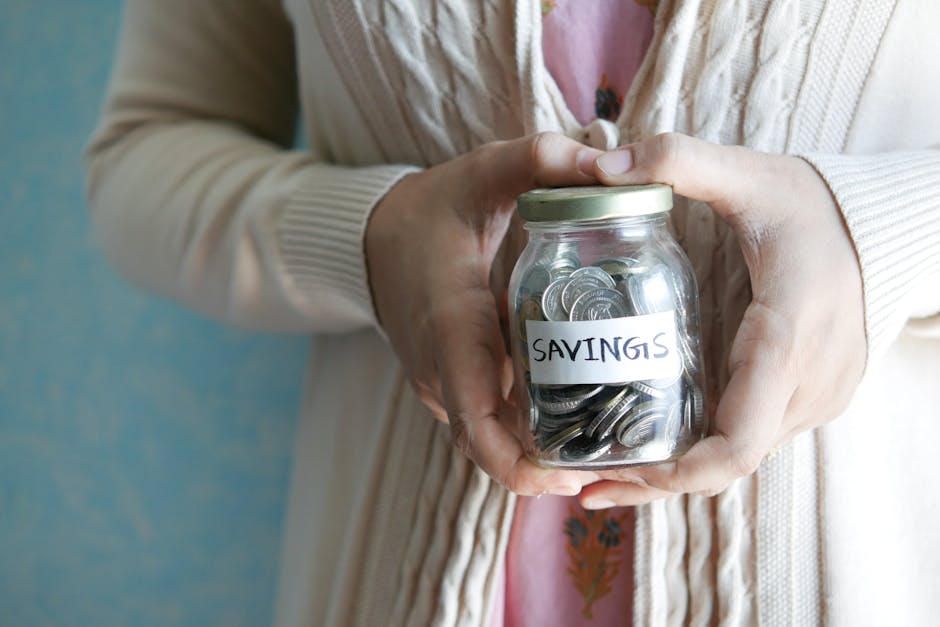
Whether you're building an emergency fund, saving for a down payment, or simply optimizing where your cash sits, choosing the right account type can meaningfully accelerate your financial goals. This guide breaks down everything you need to know to make the best decision for your situation.
High-Yield Savings Accounts vs. Money Market Accounts: Key Differences
These two account types are often confused, but they serve slightly different purposes. Here's a clear side-by-side comparison:
| Feature | High-Yield Savings Account | Money Market Account |
|---|---|---|
| Typical APY (2026) | 4.00%–4.75% | 3.75%–4.60% |
| FDIC/NCUA Insured | Yes (up to $250,000) | Yes (up to $250,000) |
| Check-Writing Privileges | No | Often Yes |
| Debit Card Access | Rarely | Often Yes |
| Minimum Balance Required | Usually $0–$1 | Often $1,000–$10,000 |
| Monthly Withdrawal Limits | May apply (varies by bank) | May apply (varies by bank) |
| Best For | Emergency funds, goal savings | Larger cash reserves, flexibility |
Both are excellent vehicles for cash that you want to keep safe, liquid, and growing. The best choice depends on whether you need check-writing access and how much you can keep on deposit.
APY Trend: How Rates Have Evolved (2018–2024)
To understand today's high-yield savings rates, it helps to see them in historical context. Rates were near zero for most of the early 2020s before the Federal Reserve's aggressive rate hikes transformed the landscape for savers.
| Year | Average High-Yield Savings APY |
|---|---|
| 2018 | 0.06% |
| 2019 | 0.09% |
| 2020 | 0.05% |
| 2021 | 0.04% |
| 2022 | 1.89% |
| 2023 | 4.33% |
| 2024 | 4.75% |
Source: AI-generated estimate based on Federal Reserve historical rate data
The jump from 0.04% in 2021 to 4.75% by 2024 represents an unprecedented shift for savers. If you haven't moved your cash into a high-yield account in the last two years, you've missed out on substantial passive returns.
Top High-Yield Savings Accounts to Consider in 2026
1. Marcus by Goldman Sachs
Marcus consistently ranks among the top HYSAs with no minimum balance requirements and no monthly fees. Their rates have closely tracked Federal Reserve movements, making them a reliable choice for most savers.
2. Ally Bank Online Savings
Ally is beloved for its user-friendly interface, automated savings tools (including "savings buckets"), and competitive APYs. No minimum balance is required, and customer service is consistently well-rated.
3. SoFi High-Yield Savings
SoFi offers some of the most competitive rates available, especially for members who set up direct deposit. It also bundles checking and savings together, simplifying account management.
4. Synchrony Bank High-Yield Savings
Synchrony offers strong rates with no minimum balance. They also offer an optional ATM card, which is unusual for a HYSA—making it slightly more accessible than most competitors.
Top Money Market Accounts in 2026
1. Vanguard Cash Plus Account
Vanguard's offering is ideal for investors who want their savings integrated with their investment accounts. Competitive rates combined with Vanguard's trusted brand make this a strong option for long-term wealth builders.
2. Discover Money Market Account
Discover's MMA offers tiered rates with check-writing privileges and a debit card. Their customer service and digital tools are highly rated, making it an accessible all-around choice.
3. CIT Bank Money Market
CIT Bank offers some of the highest MMA rates on the market with a modest minimum balance requirement, making it competitive for savers with a solid cash reserve.
How to Choose Between a HYSA and an MMA
Use this simple decision framework to guide your choice:
- Choose a HYSA if you want no minimum balance, you're building an emergency fund, or you don't need direct spending access from the account.
- Choose an MMA if you want check-writing or debit card access, you have a larger balance, or you want a hybrid between savings and checking.
- Consider both if you want to segment your savings—keeping your emergency fund in a HYSA and a separate short-term spending reserve in an MMA.
If you're looking to put idle cash to work beyond just saving, consider pairing a HYSA or MMA with a diversified investment strategy. Our guide on how to start investing with $100 is a great next step once your cash reserves are established. You might also explore passive income streams in 2026 to layer additional returns on top of your savings rate.
What to Watch Out For
- Variable rates: Both HYSAs and MMAs have variable APYs that can change with Federal Reserve policy. If rates drop, your yield drops too.
- Teaser rates: Some banks advertise promotional rates that revert to much lower rates after a few months. Always check the standard ongoing APY.
- Fees: Monthly maintenance fees can eat into your interest earnings. Look for fee-free accounts or accounts where fees are easily waived.
- Transfer times: Online banks may take 1–3 business days to transfer funds. If you need instant access, keep a small buffer in a checking account.
For broader context on protecting your financial future against economic headwinds, see our guide on inflation-proofing your portfolio in 2026.
For further reading, the FDIC's official resources can help you verify deposit insurance coverage for any bank you're considering. You should also consult the Federal Reserve's H.15 statistical release for the latest benchmark interest rate data to understand where rates may be heading.
Frequently Asked Questions
Is my money safe in a high-yield savings account?
Yes, provided your bank is FDIC-insured (or NCUA-insured for credit unions). Your deposits are protected up to $250,000 per depositor, per institution. This makes HYSAs and MMAs among the safest places to store cash outside of U.S. Treasury securities.
Can I lose money in a money market account?
Not in a bank-based MMA that is FDIC-insured. However, money market funds—which are investment products sold through brokerages—are not FDIC-insured and carry a small risk of loss. Be sure you understand the difference before investing.
How often do high-yield savings account rates change?
Rates on HYSAs and MMAs are variable, meaning banks can adjust them at any time. They tend to move in response to Federal Reserve rate decisions. During a rate-cutting cycle, expect these rates to gradually decline. Monitoring your rate every few months is a smart habit.
Should I split my savings between a HYSA and a money market account?
It can make sense. A common strategy is to keep your emergency fund (3–6 months of expenses) in a HYSA for stability, while using an MMA for larger, more accessible reserves you may need to tap with a check or debit card. Just stay within FDIC insurance limits at any single institution.
How do high-yield savings accounts compare to CDs?
Certificates of Deposit (CDs) often offer slightly higher rates in exchange for locking up your money for a fixed term (3 months to 5 years). HYSAs offer more flexibility with no lock-up period, but rates are variable. If you're confident you won't need the funds, a CD ladder can be a complementary strategy alongside a HYSA.