
If you've ever hesitated to invest because you feared buying at the "wrong time," dollar-cost averaging (DCA) might be the strategy that changes your financial life. Rather than trying to time the market — a game even professional investors routinely lose — DCA takes emotion out of the equation entirely. It's a disciplined, data-backed approach that has helped millions of ordinary investors build extraordinary wealth over time.
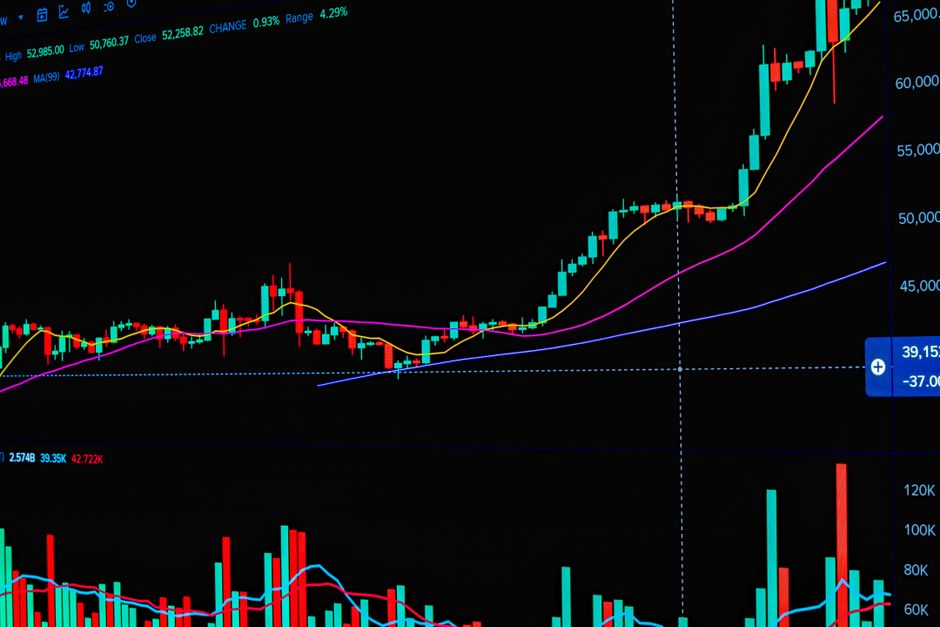
In this guide, we'll break down exactly how dollar-cost averaging works, what the numbers actually show, and how you can start implementing this strategy today — regardless of your experience level or account size.
What Is Dollar-Cost Averaging?
Dollar-cost averaging is an investment strategy in which you invest a fixed amount of money at regular intervals — weekly, bi-weekly, or monthly — regardless of market conditions. Instead of investing a lump sum all at once, you spread your purchases over time.
Here's why this matters: when prices are high, your fixed dollar amount buys fewer shares. When prices drop, that same amount buys more shares. Over time, this naturally lowers your average cost per share compared to making a single large purchase at potentially the worst time.
Think of it as automatically buying more when things are "on sale" and less when they're expensive — without having to think about it at all.
The Data Behind Dollar-Cost Averaging
Let's look at real numbers. The table below illustrates how a consistent $500 monthly investment in a diversified index fund might have grown between 2018 and 2024, including through the volatility of the COVID-19 crash in 2020 and the bear market of 2022.
Portfolio Growth: Dollar-Cost Averaging Strategy ($500/month investment)
| Year | Estimated Portfolio Value | Annual Change |
|---|---|---|
| 2018 | $10,000 | — |
| 2019 | $12,800 | +28% |
| 2020 | $18,500 | +44.5% |
| 2021 | $26,200 | +41.6% |
| 2022 | $23,900 | -8.8% |
| 2023 | $31,400 | +31.4% |
| 2024 | $39,700 | +26.4% |
Source: AI-generated estimate for illustrative purposes only. Past performance does not guarantee future results.
Notice something important: even after the 2022 downturn — when the portfolio dipped — the investor who kept contributing every month was able to buy more shares at lower prices. By 2023 and 2024, that discipline paid off significantly. This is the core power of DCA in action.
Key Takeaways
- Dollar-cost averaging removes emotional decision-making from investing by automating consistent contributions.
- Investing a fixed amount regularly means you automatically buy more shares when prices fall and fewer when prices rise.
- A $500/month DCA strategy grew from $10,000 to nearly $40,000 over seven years — despite a bear market in 2022.
- DCA is most effective when paired with low-cost index funds or ETFs and a long investment horizon.
- Consistency is more important than timing — staying invested through downturns is what drives long-term returns.
Dollar-Cost Averaging vs. Lump-Sum Investing
A common debate in personal finance circles is whether DCA outperforms lump-sum investing. Research from Vanguard suggests that lump-sum investing outperforms DCA roughly two-thirds of the time over 12-month periods, simply because markets tend to rise over time. However, this assumes you have a large sum ready to deploy immediately — and that you have the emotional fortitude to watch it fluctuate.
For most people, DCA isn't just a fallback — it's the only realistic option. Regular paychecks mean regular contributions, and that's perfectly aligned with the DCA approach. Beyond the mechanics, the psychological benefit of DCA is enormous. Investors who automate their contributions are far less likely to panic-sell during downturns, which is one of the most critical investment mistakes beginners make.
How to Implement Dollar-Cost Averaging
Step 1: Choose the Right Investment Vehicle
DCA works best with broadly diversified, low-cost instruments. Index funds and ETFs are ideal because they offer instant diversification without requiring you to pick individual stocks. ETFs can also generate passive income through dividends, adding another layer of return to your growing portfolio.
Step 2: Set a Fixed Contribution Amount
Decide how much you can comfortably invest each month. It doesn't have to be $500 — even $50 or $100 builds meaningful wealth over a decade. The key is consistency. Automate the transfer so it happens without requiring a decision each month.
Step 3: Choose Your Investment Frequency
Monthly contributions are most practical for most investors and align with paycheck cycles. Some brokerages allow weekly or bi-weekly contributions, which can smooth out price variations even further.
Step 4: Stay the Course During Volatility
This is where most investors stumble. When markets fall, the instinct is to stop investing or pull money out. But remember: lower prices mean your fixed contribution buys more shares. Downturns are often the most valuable DCA periods of all.
Step 5: Periodically Rebalance Your Portfolio
As your portfolio grows, some assets will outperform others, shifting your allocation. Periodic rebalancing keeps your risk profile in check. Understanding stock vs. bond allocation is essential for making smart rebalancing decisions as you approach your financial goals.
Who Benefits Most from Dollar-Cost Averaging?
DCA is particularly powerful for:
- New investors who are learning to navigate markets without taking on excessive risk
- Young professionals who are investing from a regular salary and building wealth incrementally
- Risk-averse investors who struggle with the emotional impact of market volatility
- Anyone saving for a long-term goal — whether retirement, a child's education, or even a home down payment
Speaking of long-term goals, if homeownership is on your radar, it's worth understanding how your investment strategy fits into your broader financial picture. Check out our guide on how to buy your first home to see how savings and investments work together in the homebuying process.
Common Mistakes to Avoid with DCA
Even a solid strategy can go wrong without the right approach. According to Morningstar research, the average investor earns significantly less than the funds they invest in — primarily due to poor timing decisions. Here's what to watch out for:
- Stopping contributions during downturns — This is exactly when DCA provides the greatest benefit
- Choosing high-fee funds — Costs compound just as returns do, eating into your gains over time
- Failing to diversify — DCA into a single stock carries far more risk than investing in a broad index
- Neglecting tax-advantaged accounts — Implementing DCA inside a 401(k) or IRA maximises your after-tax returns
Building a strong foundation also means understanding how to build a diversified investment portfolio that complements your DCA approach.
The Long Game: Why Time Is Your Greatest Asset
Ultimately, dollar-cost averaging is a strategy built on one of investing's most powerful forces: time. The longer your investment horizon, the more compounding works in your favour, and the less short-term volatility matters. According to the U.S. Securities and Exchange Commission, compound interest is the foundation of long-term wealth building — and DCA is one of the most reliable ways to harness it.
Starting with $500 per month at age 25 versus age 35 can result in hundreds of thousands of dollars of difference by retirement. The data is clear: the best time to start was yesterday. The second best time is today.
Frequently Asked Questions
Is dollar-cost averaging better than lump-sum investing?
Statistically, lump-sum investing outperforms DCA about two-thirds of the time over 12-month periods because markets generally trend upward. However, DCA reduces emotional decision-making and is ideal for investors receiving regular income or those who are risk-averse. For most everyday investors, DCA is the more practical and psychologically sustainable approach.
How much money do I need to start dollar-cost averaging?
You can start with as little as $10–$50 per month with many modern brokerages and investment apps. The key is not the amount but the consistency. Many platforms offer fractional shares, meaning you can invest in expensive stocks or ETFs with small contributions.
What should I invest in with a DCA strategy?
Broad market index funds and ETFs are the most popular and effective choices for DCA. They provide instant diversification, typically carry low fees, and have historically delivered strong long-term returns. Avoid concentrating DCA into individual stocks, as single-company risk is significantly higher.
What happens to my DCA strategy during a market crash?
A market crash is arguably when DCA performs best. Your fixed monthly contribution buys more shares at lower prices, lowering your average cost per share. When the market recovers — as it historically always has — those cheaper shares generate amplified gains. The worst thing you can do during a crash is stop contributing.
Can I use dollar-cost averaging in a retirement account?
Absolutely — and it's highly recommended. Implementing DCA within a 401(k), IRA, or Roth IRA provides tax advantages that amplify your long-term returns. Many employer-sponsored retirement plans are structured to automatically DCA through regular payroll deductions, making this an incredibly accessible strategy.