
Key Takeaways
- AI-powered investment apps in 2026 offer automated rebalancing, tax-loss harvesting, and personalized portfolio recommendations with little to no human intervention.
- Most top robo-advisors charge between 0% and 0.35% annually — far less than traditional financial advisors who typically charge 1%+.
- Beginners can start investing with as little as $1 thanks to fractional shares and low minimum balance requirements.
- AI apps work best when paired with a solid financial foundation — including an emergency fund and a debt-payoff plan.
- Features like goal-based investing, risk profiling, and automatic contributions make these apps ideal for hands-off investors.
Investing used to feel like a club reserved for the wealthy — you needed a broker, a sizeable portfolio, and enough financial knowledge to decode market jargon. In 2026, AI has changed that completely. Whether you have $50 or $50,000, today's AI-powered investment apps can build, manage, and optimize a portfolio on your behalf — automatically.
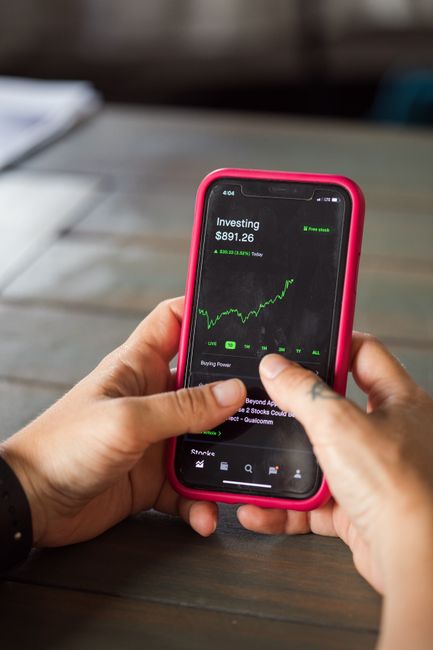
If you're new to investing and wondering where to start, this guide breaks down the best AI investment platforms of 2026, what sets them apart, and how to choose the right one for your financial goals. If you're just getting started, you might also want to read our guide on how to start investing with $100 before diving in.
What Are AI-Powered Investment Apps?
AI investment apps — commonly called robo-advisors — use machine learning algorithms and data-driven models to manage your investments automatically. After you answer a short questionnaire about your risk tolerance, goals, and timeline, the app builds a diversified portfolio of ETFs or index funds tailored to your profile.
In 2026, these platforms have evolved significantly. Modern AI advisors now incorporate:
- Predictive rebalancing — anticipating market shifts before they happen
- Tax-loss harvesting — automatically selling underperforming assets to offset gains
- Behavioral nudges — using psychology-backed prompts to keep you on track
- Natural language interfaces — letting you ask financial questions like you would a human advisor
Top AI Investment Apps of 2026 Compared
Here's a side-by-side comparison of the leading platforms available to beginner investors in 2026:
| App | Annual Fee | Minimum Balance | Tax-Loss Harvesting | Best For |
|---|---|---|---|---|
| Betterment | 0.25% | $0 | Yes | All-around beginners |
| Wealthfront | 0.25% | $500 | Yes | Tech-savvy investors |
| SoFi Invest | 0% | $1 | No | Fee-conscious beginners |
| Schwab Intelligent Portfolios | 0% | $5,000 | Yes (Premium) | Larger beginner portfolios |
| Acorns | $3/month | $0 | No | Micro-investors / spare change |
| Fidelity Go | 0% (under $25K) | $0 | No | Fidelity account holders |
How to Choose the Right App for You
1. Consider Your Starting Balance
If you're starting small, platforms like SoFi, Betterment, or Acorns let you begin with virtually nothing. If you already have $5,000 or more, Schwab's free robo-advisor becomes highly competitive.
2. Prioritize Tax Efficiency If You're in a Taxable Account
Tax-loss harvesting can save you hundreds annually if you're investing outside a retirement account. Betterment and Wealthfront are industry leaders here. Be sure you've also explored passive income strategies that complement your portfolio returns.
3. Look at the Total Cost
A 0.25% fee sounds tiny, but on a $50,000 portfolio, that's $125 per year. "Free" platforms like SoFi or Fidelity Go can save money — though they often offset costs through other means like cash holdings or upsells.
4. Check for Goal-Based Planning Tools
The best AI apps in 2026 don't just invest your money — they tie it to specific goals. Look for features like retirement projections, house-down-payment goals, and automated contribution scheduling.
Global Energy Use Per Capita: Context for Long-Term Investing
Understanding macro-level trends helps investors make informed decisions about sector allocations. The following data illustrates global energy use per capita (kg of oil equivalent) over the past decade — a key indicator watched by ESG and clean energy investors.
| Year | Energy Use Per Capita (kg oil equivalent) |
|---|---|
| 2015 | 1,791.33 |
| 2016 | 1,786.05 |
| 2017 | 1,803.86 |
| 2018 | 1,826.86 |
| 2019 | 1,828.20 |
| 2020 | 1,761.79 |
| 2021 | 1,853.13 |
| 2022 | 1,853.42 |
| 2023 | 1,869.50 |
| 2024 | 1,892.16 |
Source: World Bank — Energy Use Per Capita (EG.USE.PCAP.KG.OE)
This recovery after the 2020 dip — caused by pandemic-era shutdowns — illustrates why AI tools that incorporate macro data can offer smarter portfolio adjustments than simple index tracking alone. Platforms like Wealthfront already integrate ESG overlays that factor in such trends.
Are AI Investment Apps Safe?
Yes — with caveats. All reputable robo-advisors are registered with the SEC and covered by SIPC insurance up to $500,000. This means your investment accounts are protected if the brokerage fails — though it does not protect against investment losses due to market downturns.
For additional security, ensure you have a financial cushion before investing. Check out our emergency fund calculator to make sure your safety net is in place before committing money to markets.
The Beginner's Launch Plan: 3 Steps
- Clear high-interest debt first. AI apps can't outperform 20% credit card interest. Read our breakdown of debt payoff strategies to tackle this first.
- Fund your emergency savings. Aim for 3–6 months of expenses in a high-yield savings account before investing in markets.
- Open a robo-advisor account and automate contributions. Even $25/week compounded over 20 years at a 7% average return grows to over $65,000.
What's New in 2026: AI Features to Watch
This year's robo-advisors go far beyond simple ETF allocation. Leading features to look for include:
- Conversational AI advisors — Ask questions in plain English and get personalized answers
- Dynamic risk adjustment — Portfolios that automatically shift based on your life events (job change, new baby, etc.)
- Integrated budgeting and investing dashboards — Platforms now sync with AI budget apps for a full financial picture. See our roundup of the best AI budget apps of 2026 for complementary tools.
- Alternative asset access — Some platforms now offer fractional real estate, private credit, and crypto allocations alongside traditional ETFs
For further reading on robo-advisor regulations and how they're overseen, visit the SEC's guidance on robo-advisors and Investopedia's comprehensive robo-advisor overview.
Frequently Asked Questions
Are AI investment apps better than human financial advisors?
For most beginner and intermediate investors, AI apps offer comparable or better results for a fraction of the cost. Human advisors add value for complex situations like estate planning, business ownership, or significant tax issues. If your portfolio is under $250,000 and your needs are straightforward, a robo-advisor is almost always the smarter financial choice.
How much money do I need to start using a robo-advisor?
Many platforms — including Betterment, SoFi, Fidelity Go, and Acorns — have no minimum balance requirement. You can literally start with $1. Schwab Intelligent Portfolios requires $5,000, but charges no management fee, making it excellent for those with more capital.
Can I lose money with an AI investment app?
Yes. AI apps invest in real markets, and markets go down. No algorithm can guarantee profits. However, automated diversification, rebalancing, and tax-loss harvesting reduce unnecessary losses and improve long-term outcomes compared to doing nothing or panic-selling manually.
Is my money safe if the robo-advisor company shuts down?
Yes — your investments are held in your name at a custodial brokerage, separate from the app company's own assets. SIPC insurance covers up to $500,000 in securities and $250,000 in cash if the custodian fails. You would not lose your investments if the app company itself went bankrupt.
Should I use an AI investment app or invest in index funds myself?
Both are valid strategies. DIY index fund investing through a platform like Fidelity or Vanguard typically has lower costs, but requires more discipline and knowledge. Robo-advisors automate the process entirely, reducing decision fatigue and behavioral errors — which studies show cost average investors 1–2% in annual returns due to emotional trading.


Comments
No comments yet. Be the first to share your thoughts.